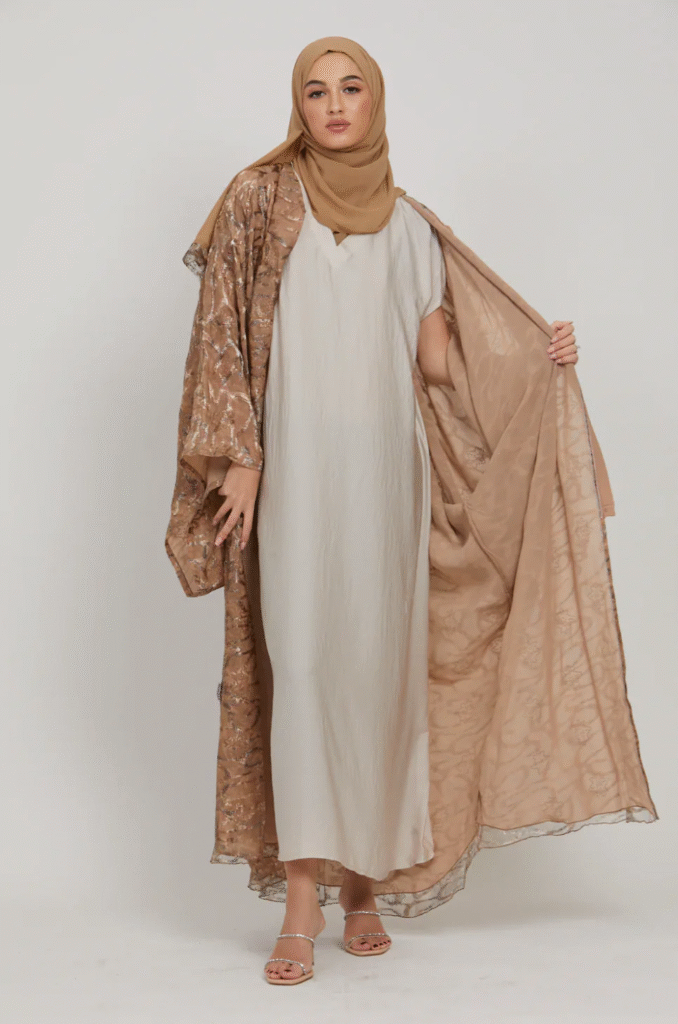

1. Choosing the Right Fabric
Abaya Fabrics
- Nidha (premium soft fabric) – best for flowy, elegant abayas
- Crepe – lightweight and durable
- Satin / Silk blend – for luxury or formal events
- Jersey – comfortable and breathable for everyday use
Hijab Fabrics
- Chiffon – classy and lightweight, perfect for abayas
- Jersey – no pins needed, ideal for daily and active wear
- Satin – elegant, used for weddings or parties
- Cotton – simple and modest look
2. Matching Colors Properly
Here are combinations that always work:
Classic Colors
- Black abaya + black or beige hijab
- Navy abaya + cream hijab
- Brown abaya + mocha hijab
Trendy Colors (2025)
- Olive abaya + gold hijab
- Mauve abaya + dusty pink hijab
- White abaya + champagne hijab
3. Proper Hijab Draping With Abaya
To achieve a neat and modest look:
- Ensure the hijab covers the neck fully
- Use under-scarf (inner cap) to secure the hijab
- For chiffon hijabs, use 2–3 lightweight pins
- Keep the drape simple and clean, especially for formal abayas
4. Accessories to Complete the Look
- Long sleeves and proper coverage maintain modesty
- Minimal jewelry (rings or bracelets) for elegance
- Matching bag & shoes for fashion wear
- Waist belts (optional) for structured abayas
5. Types of Abayas to Know
Open Abaya
Wear with inner dress; elegant & flowy.
Closed Abaya
Classic traditional style.
Kimono Abaya
Wide sleeves, trendy and comfortable.
Embroidered Abaya
Best for parties and special events.
Plain Crepe Abaya
Perfect for daily modest wear.
6. Modesty Guidelines (Islamic)
- Clothing should not be transparent
- Abaya should cover from shoulders to feet
- Hijab should cover hair, neck, and chest area appropriately
- The outfit should not be tight-fitting